


Time Flies? The Year To Be
- Dec 31, 2025
- 3 min read
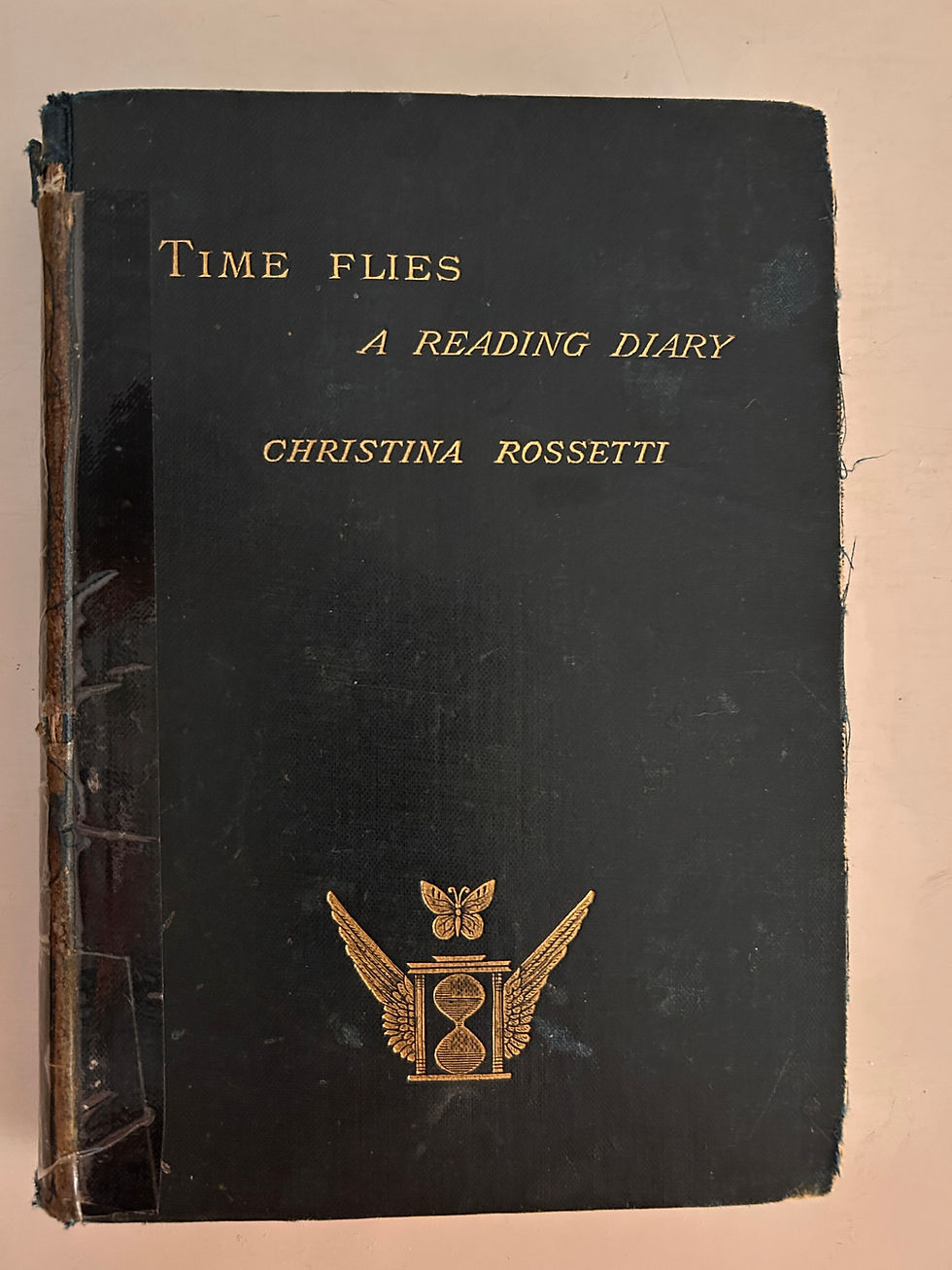
There is a little-known work by the English poet, Christina Rossetti, published towards the end of her life in 1885 which is simply titled, Time Flies: A Reading Diary. It contains short prose and poetic devotional meditations for each day of the year. These reflections, anchored in the Anglican Church Calendar, are personal but also broad in their subject matter. Some are dedicated to the Feast of that particular day’s saint; others draw on a line from the Gospels. Quite a number take their inspiration from the natural world.
Christina Rossetti begins her Reading Diary on January 1: The Feast of the Circumcision, with these following words - ‘Mother Church who opens the ecclesiastical year for her children with alarum of Advent, opens for them the civil year with a Divine example of self denial.’ Christ began his earthly life in circumstances of material privation and hardship. His spiritual life on earth began ‘in a sense’ at his circumcision with the suffering of shedding blood. All this was done out of ‘the loving choice’ of Divine free will. Rossetti then reminds us of our call as Christians not to premise life on seeking to find our own comfort, ‘eager to lie soft and warm’, but to be alert to the pain and need of others. To see and then find ways of bringing healing to another, is to see and act on the revelation of Christ in others.
‘Time flies’ is an expression taken by Rossetti from 1st century BCE classical poet Virgil. It’s translated from the Latin: tempus fugit. A question today (even then perhaps) could be, is it time that flies or is it we who fly fast through time? I’m struck by Mary’s reaction in Luke’s Gospel when the shepherds tell her what they had been told about the child, Jesus: she ‘treasured all these words and pondered them in her heart.’ (Luke 2:19) The Greek word for ‘pondered’ or ‘pondering’ here is symballousa which literally means ‘to throw together.’ Mary is living very much in circumstances of the situation itself, and ‘throwing together’, so to speak, what must be a mixture of feelings and different points of view. It’s a place of pause, of timelessness.
There is no dedicated Christian road map explaining how to live our lives; how to be alert to the pain or needs of others. We have charts, such as a way shown in the Beatitudes or example in praying the Lord’s Prayer. We have the Gospels and the other books in the New Testament. But in essence, the Christian way is simply and radically, Christ himself. This means knowing our own selves in relationship with our Lord. And for each of us this relationship will be utterly unique, without coercion or manipulation; life giving in its offering to us the choice of free will. Therefore, who we are and what we do will be individual and unrepeatable, drawn out in Christ from our gifts and talents. But we can only know this relationship by giving ourselves time to ponder these mysteries in our hearts. Like Mary, entering that space of time-lessness.
This coming year of 2026 as we move through the necessary tasks and routines of each day, may we weave into the rhythm of our own lives intervals of rest and reflection so that consciousness of Christ’s relationship within us may grow. May we be alert to the very present pain and distress of others, resisting the temptation of time to numb us into distraction. May each day be one that matters in the growing of God’s kingdom here on earth.
Comments